

.png)
Yet another bank initiative in the world of stablecoins. Following the announcement by ING, UniCredit and seven other European banks, it is now the turn of ten of the world's largest institutions - including Bank of America, Goldman Sachs, Deutsche Bank, BNP Paribas, Santander and UBS - to announce the creation of a consortium to explore the issuance of stablecoins backed by the major G7 currencies, including the dollar and the euro.
This marks another attempt by traditional financial institutions to get to grips with the subject of digital assets, at a time when the market for stablecoins is experiencing historic growth.
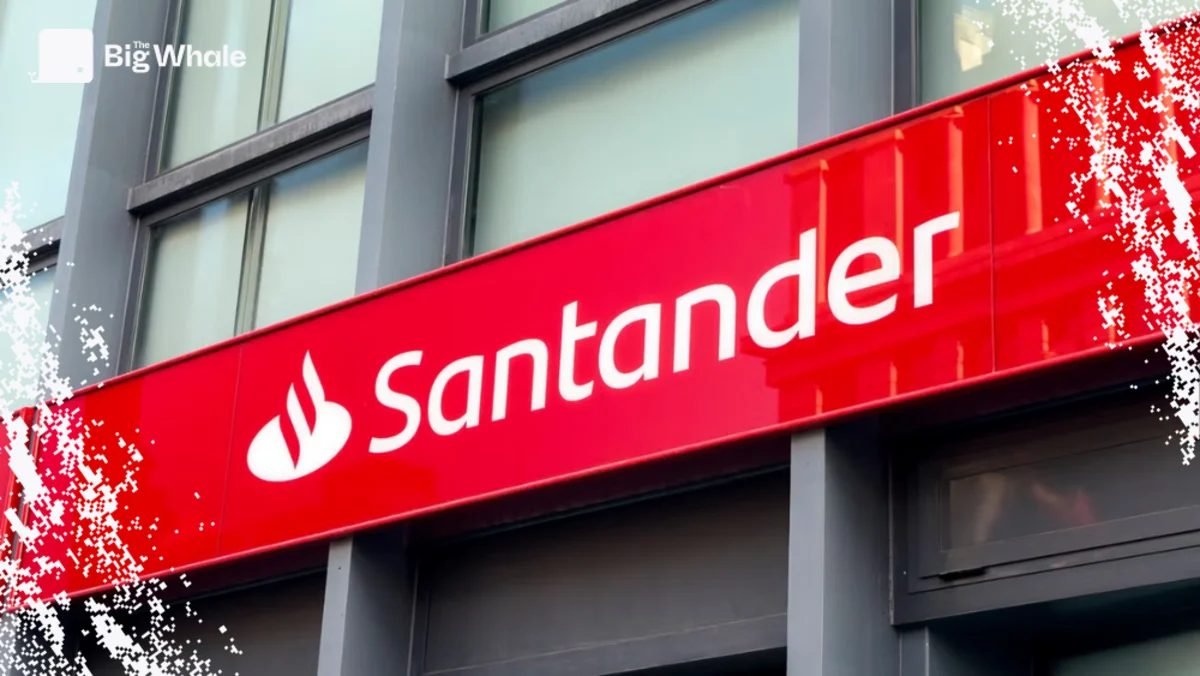
A project quietly led by Santander
According to exclusive information from The Big Whale, Santander is said to be the real driving force behind this new initiative.
The Spanish bank is said to have initiated the project, initially focused on Europe, before US banks joined the movement in recent months.
The common link between all these financial giants is called Fnality, a UK startup specialising in blockchain infrastructure for interbank settlements.
Santander was one of its first investors, alongside other European institutions including BNP Paribas.
The US banks joined Fnality in its Series C funding round in September, providing both capital and an even more international dimension.
Fnality could thus provide the central monetary infrastructure (USD, EUR, GBP) enabling these future bank stablecoins to be issued and settled, serving as a technological bridge between the institutions in the consortium.
"It's very difficult to say no to US banks," a European source close to the matter tells The Big Whale.
A global consortium... and some European absentees
In addition to Santander and BNP Paribas, the list includes Bank of America, Deutsche Bank, Goldman Sachs, Citi, MUFG, Barclays, TD Bank and UBS.
The stated aim is to study the feasibility of 1:1 digital assets backed by real currencies, issued on public blockchains, while ensuring regulatory compliance and rigorous risk management.
The project remains at an exploratory stage, with the banks keen to test concrete use cases in the coming months.
Notably, several consortium members have declined the invitation to join the other group of nine European banks, led by ING and UniCredit, and focused on a MiCA-compliant euro stablecoin.
"There were not enough Tier 1 banks in this consortium," says one European banker.
Europe is moving forward on its own
The European consortium, formed by ING, UniCredit, CaixaBank, Danske Bank, SEB, DekaBank, KBC, Banca Sella and Raiffeisen Bank International, aims to issue a euro stablecoin from 2026, under the supervision of the Dutch Central Bank.
Their ambition: to create a credible European alternative to the dominance of dollar-denominated stablecoins, which today account for almost 99.8% of the market, as shown by the data from The Big Whale.
This project marks an initial collective response to the growing imbalance in the sector, while the dominant stablecoins, such as Tether (USDT), now weigh in at more than $179 billion out of a total of $310 billion.
According to information from Bloomberg, confirmed by The Big Whale, Citi has reportedly joined the euro stablecoin project launched by ING and UniCredit.
"It's a double-edged sword. It's good to have Americans for distribution, but it raises questions in terms of sovereignty", analyses one expert.
Traditional finance is (finally) opening up to stablecoins
These initiatives come against a backdrop of renewed enthusiasm for crypto-assets, buoyed by the rise of digital markets and US President Donald Trump's open support for the sector.
But regulators remain vigilant.
Bank of England governor Andrew Bailey warned UK banks against issuing their own stablecoins, while Christine Lagarde (ECB) reiterated that private stablecoins could pose a risk to monetary policy and financial stability.
For the time being, stablecoins are mainly used for transactions between crypto platforms, and less than 6% of volumes involve actual payments for goods or services, according to a BCG report.
A battle for influence between banks and states
Between the transatlantic project steered by Santander and Fnality and the European consortium led by ING, two visions are emerging.
The first is banking on global collaboration, open to the major currencies.
The second is defending European monetary sovereignty, aligned with MiCA - even if the arrival of Citi could reshuffle the cards.
In both cases, one thing is certain: tokenisation and stablecoins are emerging as the new strategic playground of global finance.














%201.png)
%201.png)















%201.png)