

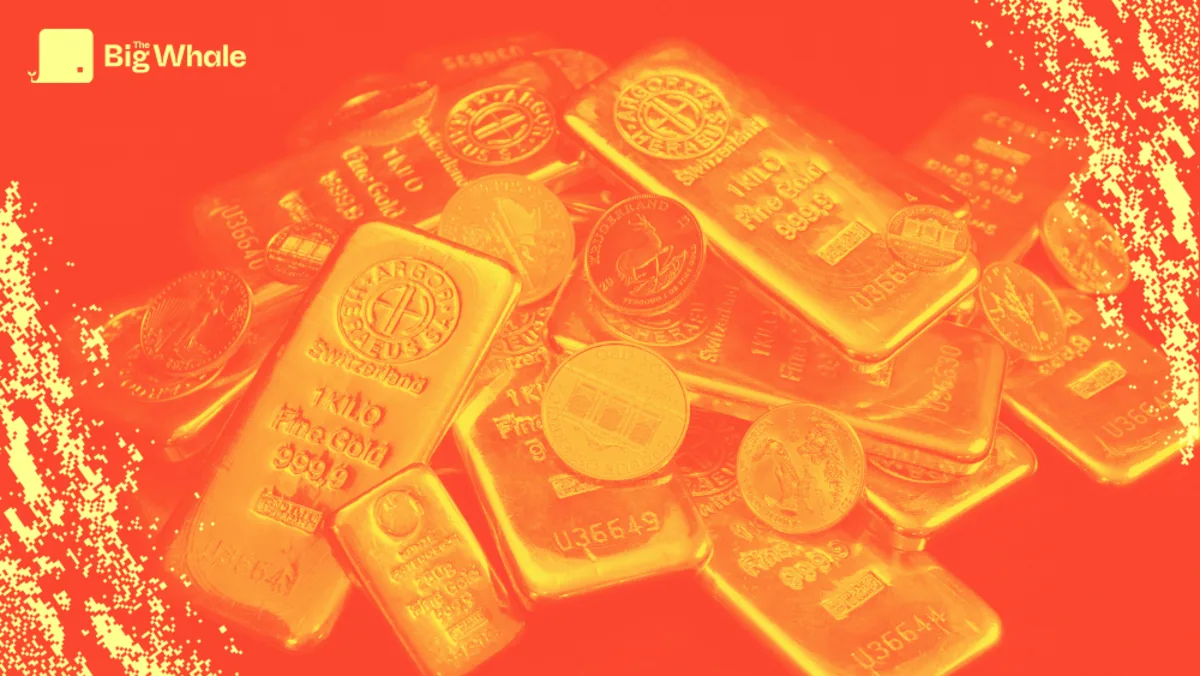
What if gold once again became an asset of the future? That's the bold bet of Bity, the Swiss company specialising in crypto services, which is launching a new tokenised gold offering. In contrast to ETFs and other products backed by pooled gold "pools", each gram here corresponds to a real physical bar, stored in Switzerland, and linked to a unique NFT.
"We want to show that gold, like Bitcoin, is a timeless store of value," explains Melissa Song, CEO of Bity. "Many young people associate gold with a traditional, almost antiquated investment - their parents'. We want to break this perception."
The chosen method: tokenisation, i.e. the association of a physical asset with a tamper-proof digital certificate. Bity buys gold bars directly from Metalor, one of Switzerland's largest refiners. Each bar - available in sizes from 1g to 1kg - is photographed, registered with its serial number and then converted into an NFT. This "certificate of ownership" is then hosted on the blockchain Internet Computer (ICP).
"With tokenisation, you can own a real gold bar, without having to store it under your bed," smiles Melissa Song. And if the urge strikes to retrieve the gold, all you have to do is turn up at Metalor or Loomis, where it's kept in secure vaults, along with your NFT.
A more transparent, granular model
Gold ETFs (like BlackRock's) give you exposure to the price of gold, but not the gold itself. You are buying a right, not a property. Worse still: you cannot physically withdraw an ounce, even if you want to.
The same logic applies to tokens such as PaxGold or Tether Gold: these solutions backed by large quantities of pooled gold do not guarantee a direct match between the token and a bar of gold. And physical withdrawals are often reserved for large volumes of 400g or more.
"Our solution is not paper gold", says Michael Peterer, COO of Bity. "Each NFT corresponds to a precise, identifiable bar, physically stored in Switzerland. It's not a right to a stock, it's an individual property."
The ability to withdraw gold from as little as 1 gram, with no minimum amount, makes the product much more accessible. "There's an important psychological aspect: owning your gold bar, with your photos, your certificate, it's concrete and reassuring," insists Michael Peterer.
Another strong argument: no storage or insurance costs are charged. These costs are built into Bity's margins, making the product competitive over the long term. And in the event of bankruptcy? "The gold bars remain segregated, off balance sheet, thanks to specific contracts. The owner of the NFT remains the legal owner," explains Melissa Song.
>> Read also - Digital art: how NFTs have become a new asset class
Digital security and sovereignty
The choice of Internet Computer (ICP), rather than Ethereum, may come as a surprise. But it is a conscious choice.
"Ethereum is dominant today, but very limited for storing large files such as photos or PDF certificates," explains Michael Peterer. In contrast, ICP allows all metadata to be stored directly on the blockchain, without relying on external servers or IPFS. "This guarantees the integrity of the certificate over the long term."
For an asset as tangible and symbolic as gold, this digital reliability is central. "On ICP, data is truly stored "on-chain". This strengthens confidence."
A new era for gold?
Bity's ambition goes beyond simple technological innovation. It is also about reconciling gold with a younger generation, used to digital ownership, the transparency of blockchains, and assets without intermediaries.
"We wanted to build a product that combines the solidity of gold with the modernity of blockchain," concludes Melissa Song. The result? A hybrid form of investment, tangible and digital, practical and sovereign, that could well restore gold to its former glory... version 3.0.
>> TBW Report: Is tokenisation the future of finance?

.png)













%201.png)
%201.png)














%201.png)