TL;DR
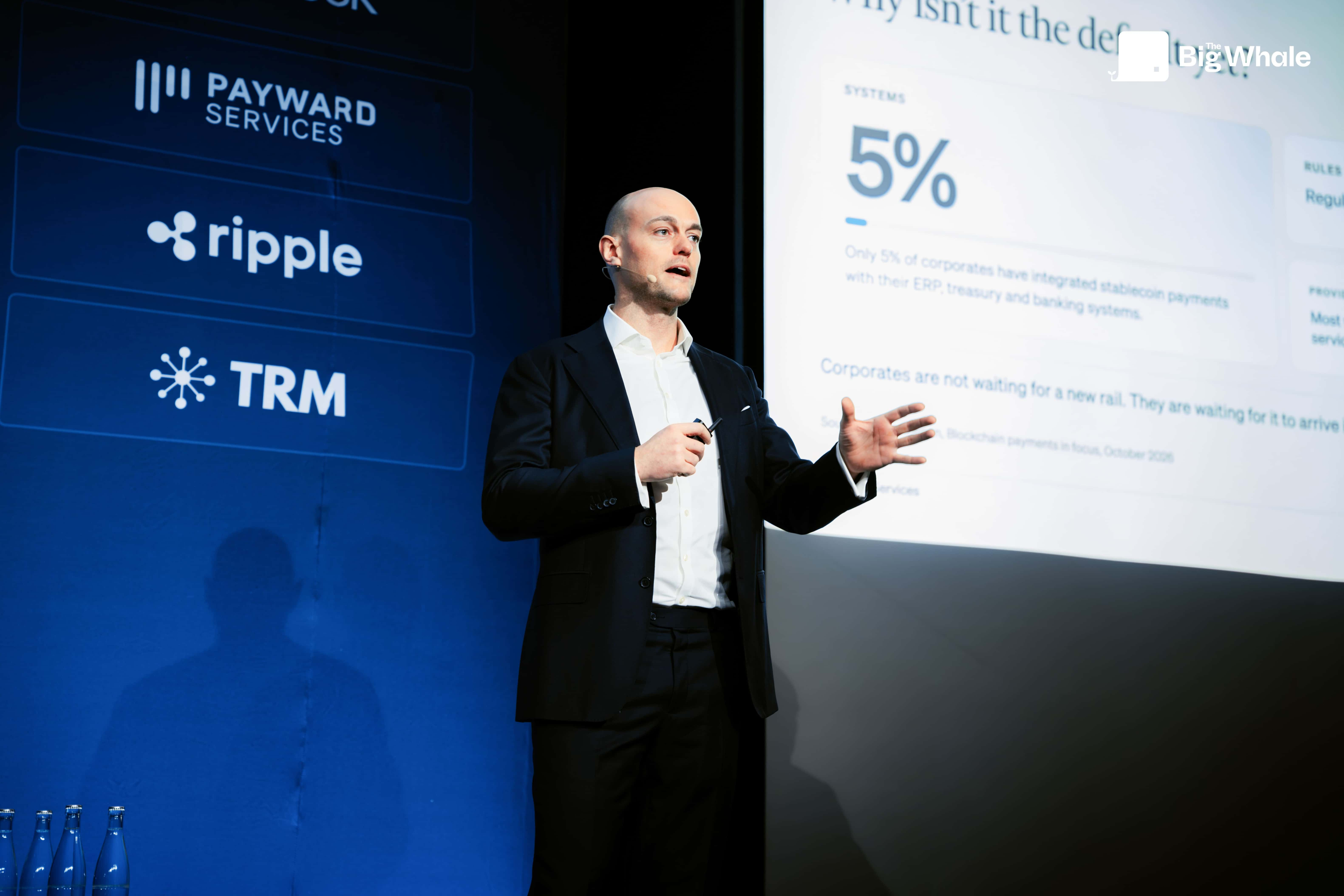
- In a survey of 500 treasurers at large corporates cited in the keynote, 86% said stablecoins could reduce the cost of their treasury function, yet only 5% use them today.
- Two brakes explain the gap: regulatory uncertainty, eased in the US by the GENIUS Act, and corporates waiting for their banks to offer wallets, custody and stablecoin payments.
- Instant, round-the-clock rails could let corporates sweep cash into stablecoins or tokenized deposits and on into tokenized money market funds, an opening for asset managers.
- A travel booking platform cut payment times to hotels from up to 60 days to a couple of days and reduced foreign exchange and payment fees by more than 90%, according to the speaker.
- Asked whether stablecoins are already a default rail, only about 2% of the room said yes, and most saw them as a specialist tool.
Speakers
Keynote: Default rail or specialist tool?
- Ben Grout, Head of Sales at Payward Services
The Summit was held under the Chatham House Rule: statements are reported without attributing them to a named speaker or affiliation.
Treasurers expect savings, few act
The speaker, who spent fifteen years in corporate treasury payments at banks before moving to digital assets, opened with a survey of 500 treasurers at large corporates, who were asked where stablecoin payments would help them most. The room guessed treasury efficiency, while the most common answer among treasurers was cost, through lower foreign exchange and payment fees:
- 86% of treasurers think stablecoins could reduce the cost of their treasury function
- 5% use stablecoins today
The speaker named two reasons for the gap. The first is regulatory uncertainty, which the GENIUS Act has eased in the US over the past year or so. The second is that corporates are waiting for their banks to offer wallets, custody and stablecoin payments inside the systems they already use.
Cash that no longer has to sit at the bank
The speaker spent years setting up cash concentration and multi-currency notional pooling for large corporates, structures that keep balances inside the bank and generate fees and yield for it. Subscription and redemption windows mean only part of that cash moves into money market funds. If rails are instant and open around the clock, a corporate could sweep cash into a stablecoin or tokenized deposit, move it into a tokenized money market fund and pull it back exactly when needed. For the speaker, this is where asset managers can offer yield on the large cash balances corporates hold, once banks have put the rails in place.
One corporate that did not wait
The speaker described a client in travel booking that sits between booking agents, hotels, car rental firms and airlines. The company accepts euro, sterling and dollar payments from its agents, converts them instantly into USDC, earns yield on the balance and pays out in local currency when payments fall due. According to the speaker:
- Payment times to some hotels fell from up to 60 days to a couple of days
- Foreign exchange and payment fees fell by more than 90%
- The travel industry estimates about $80 billion is trapped in its settlement cycle, waiting for cross-border payments, sanctions screening or invoicing
Where is the cash stuck?
When corporates and institutions approach the speaker's firm about stablecoins, the first questions are where cash sits and where it gets stuck:
- In the invoicing cycle, including paper-based documents such as bills of lading in shipping
- Behind cut-off times, for example funds received in the US on a Friday that cannot reach Asia before Monday
- With local intermediaries in the supply chain, or in foreign exchange
- In supplier payments that can take ten days to arrive across borders
- In collateral posted for trading
On collateral, the speaker described investing in a tokenized index fund or stock and posting it as collateral that can be liquidated instantly, which keeps market exposure while freeing cash that is trapped today.
The room's verdict
Asked whether stablecoin payments have become a major rail, only about 2% of the room said yes. A much larger share saw them as a specialist tool not yet adopted by corporates and banks, fewer than the speaker expected thought tokenized bank deposits would become the default instead, and some remained unsure.
An asset manager in the audience asked why adoption is slow in commodity trading, given Geneva's role in the sector. The speaker pointed to a traditional industry wary of the lack of regulation in DeFi and to countries still defining their stance on tokenized commodities, while noting that traditional institutions have launched tokenized gold. The speaker expects interest to grow over the next 12 to 18 months, especially if investors move from equities towards precious metals as a safe haven.
Conclusion
The keynote framed stablecoins in corporate treasury as a case where demand exists on paper and adoption waits on banks and rules. The speaker's diagnostic starts with where cash is stuck, from invoices and cut-off times to collateral, and the one example shared showed what changes when payments move instantly: faster supplier payments, lower fees and yield on cash in transit.