

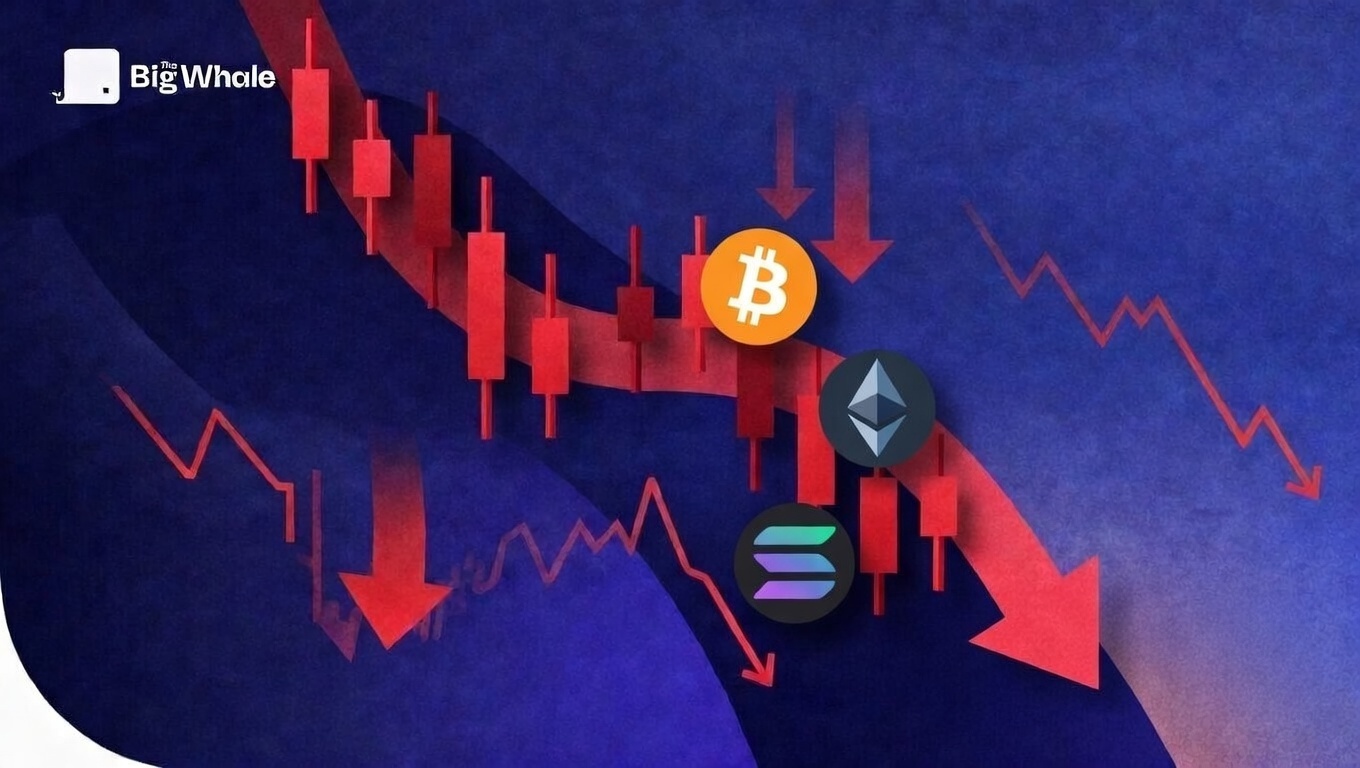
Bitcoin closed the week at $61,162, down 6.3%, after falling to $55,150 on Saturday, its lowest level in about two years and below the June low near $58,000 that we named as the next support. It held near $65,000 until Nvidia reported, then lost 2.9% on Wednesday, 1.7% on Thursday and 5.0% on Friday before bouncing 2.2% on Saturday and 1.8% on Sunday. The weekly close is about 10% below the 200-week average near $68,000.
For asset managers, portfolio managers and digital asset desks, the week showed that a good earnings report does not stop a de-risking. In last week's brief, we made a Nvidia miss the trigger of our bear case and a beat part of our repair case. Nvidia beat, and the bear case played out anyway.
A weekend flush clears the longs
About $2.52 billion of longs were liquidated on 20 and 21 November. Spot volume was $34 billion on Friday and $28 billion on Saturday, the capitulation days, and fell to $14 billion over the last 24 hours. Our rough heuristic is that a recovery needs $45 billion to $60 billion a day, sustained, so even the sell-off days fell short and the bounce has not shown it.
ETFs add to the selling
US spot Bitcoin ETFs lost $1.79 billion on the week, the third-largest weekly outflow on record, and BlackRock's IBIT accounted for $1.37 billion of it. Ether funds lost $306 million, an eighth straight week of outflows.
Why it matters: a Nvidia beat is not enough, and every risk asset sells except Treasuries
Nvidia beats and still falls
Nvidia reported revenue of $115.8 billion against $109.2 billion expected and earnings of $2.68 a share against $2.47, and guided to $127.4 billion to $132.6 billion for the next quarter. The stock rose after hours and reversed on Wednesday. It fell 14.0% on Friday to $125.53 on reports of an SEC probe into its accounting, which Nvidia and the SEC did not comment on. It lost 22.9% on the week, its seventh straight weekly loss.
Stocks have their worst week in 18 months
The S&P 500 fell 8.6% to 6,910.39 and closed in a correction, more than 10% below its 6 October record. The Nasdaq-100 lost 10.4%, its worst week since March 2020, and touched bear-market territory on Friday. The Dow fell 8.0%, the Russell 2000 7.5%, and the Nasdaq Composite turned negative for the year. On Friday the Philadelphia Semiconductor Index lost 10.7%, with AMD down 13.2%, Broadcom 12.2% and Micron 13.9%. Memory and AI power names took the heaviest losses, with a memory ETF down 21% on the week.
Anthropic's IPO adds supply
Anthropic priced at $83 on 18 November and raised $81.3 billion, the largest offering on record. It opened near $111.50 on Thursday, closed at $97 and fell 8.5% on Friday. Our read is that an $81 billion offering is supply that other AI holdings had to be sold to absorb, and that investors used the debut to take profits.
Treasuries are the only bid
The 10-year yield fell about 20 basis points on the week to 4.92% as Treasuries caught a bid. Gold fell about 4% on Friday to near $3,540, its worst week since March, silver fell about 5%, and Brent dropped 3.4% on the week to $92.57. Even defensives gave ground on the week, with staples down about 2% and utilities about 3%, though staples were the only sector to rise on Friday. Crypto and commodities took no inflows either, and Bitcoin's 5.0% fall on Friday matched the Nasdaq Composite's 5.3%, so it kept trading as a high-beta tail of the Nasdaq with no ETF bid to cushion it.
The Fed still points to a hike
Markets price a December hike at about 92%, down from about 95% before the rout. Governor Christopher Waller wants a half-point move on the table, and New York Fed President John Williams has ruled one out.
Valuations compress as earnings estimates rise
The S&P 500's forward price-to-earnings ratio had already fallen from 22.0 at the start of the year to 17.7 on 5 November, the lowest in more than three years, because forward earnings estimates rose 33.6% while the index rose 7.4%. On unchanged estimates it was near 16.6 at Friday's close. Our read is that investors no longer pay for earnings growth they doubt will last into 2027 and 2028.
The Big Whale's take
Last week's call: right on direction, wrong on the trigger
Our base case had equity indexes holding up and Bitcoin trading between $62,000 and $68,000, and both failed: the S&P 500 lost 8.6% and Bitcoin fell to $55,150. The bear case played out without its trigger, because the other chips and the indexes fell even though Nvidia beat, and Bitcoin revisited the June low. The repair case assumed a beat would settle the leadership question, and it did not. A weekly close above the 200-week average never came, so the bearish read stands.
Levels to watch
For Bitcoin, Saturday's low of $55,150 comes first, with the June low near $58,000 and the roughly $62,000 area above it, then the 200-week average near $68,000 and the 50-week average near $75,000. Moving averages vary slightly by data vendor, so treat these levels as approximate. For stocks, the S&P 500 is in a correction at 6,910 and the Nasdaq-100 is near bear-market territory at 25,029, with the VIX at 35.89.
What we expect next
The October PCE on 25 November, the jobs report on 4 December and the FOMC on 8 and 9 December set the path, and the November CPI lands on 10 December, a day after the decision. US markets are closed on Thursday for Thanksgiving.
Base case: We are in the value-extraction phase of the AI trade, and the pace of selling calms over about the next month, into the FOMC, where the Fed hikes by a quarter point. A repeat of this week's fat-tail move is unlikely, but a steadier sell-off can persist through November and December, depending on macro and on whether investors keep rotating out or buy these assets at a discount. Bitcoin trades between $55,000 and $62,000, and ETF flows stay negative. In crypto the move is about leverage, and in equities it is about the narrative that the AI trade cannot grow at the rate everyone expected.
Bear case: A half-point hike, a hawkish projection or more headlines on Nvidia push the selling further. How far is the open question, and we do not put a number on it. In our read, the circular financing behind the AI buildout takes longer to unwind than most expected, and the bottom forms when something gives.
Repair case: The hike lands at a quarter point without a hawkish surprise and marks the bottom, though we cannot know that in advance. A weekly close back above the 200-week average near $68,000 would be the first clear signal that the bearish read is failing.
For professional clients only. Not investment advice. Past performance is not indicative of future results.